

A case study ofTomiyasu Metal Prin ting Co.,Ltd. which has installed the JFX200-1213 EX was published in the order goods magazine "OGBS magazine" , Vol. 105 (November 2026 issue).
The following is the published article in its original form.
Sales Increased by Tens of Millions of Yen with Three JFX, "Clear Ink and Foil That Stand Out on Metal Have Been Well Received"
― Beyond Signs and Displays: How the Large-Format Flatbed UV Printer JFX200-1213 EX Is Used for Goods Production
Tomiyasu Metal Printing Co., Ltd., known as "Tomikin," holds over 50% of Japan’s can-printing market. It produces a wide range of cans, from beverage and confectionery cans to 18-liter industrial cans, with offset presses handling runs of tens of thousands.
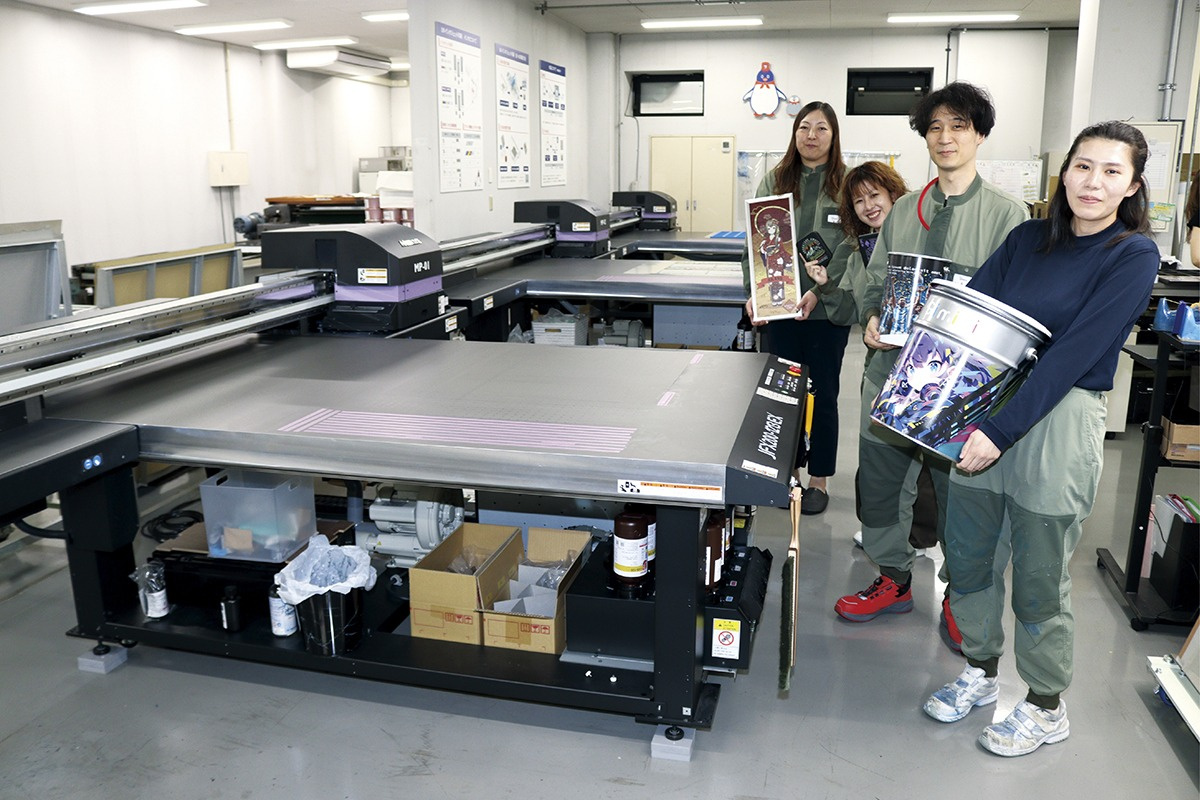
Inside Tomiyasu’s factory, three JFX200-1213 EX printers are used to produce custom cans and metal posters.
Excellent Compatibility Between the Ink and Metal
The can market has been gradually shrinking due to the rise of PET bottles and retort pouches, as well as declining demand for canned coffee. In response, Tomiyasu Metal Printing began producing custom cans and metal posters from single-unit orders, expanding beyond container manufacturers to general businesses and retailers. These small-lot products were printed on a large-format UV printer, but when parts support for that model ended, the company began looking for a replacement.
The key requirement for the new UV printer was compatibility between the ink and metal. Since cans are made from specialized metal materials, not every UV printer can produce clean results. After comparing several manufacturers, Tomiyasu found Mimaki’s JFX Series to be particularly well suited.
"Cans need to be coated after printing, and poor compatibility between the coating and UV ink can cause bleeding or cracking. We work with major can manufacturers, so quality is very important. While we saw ink cracking with some other UV printers, the JFX worked well with our coating materials and produced clean prints without cracking. We introduced three units between January and May 2024." says Shiho Mochizuki, Chief of the Sales Development Department.
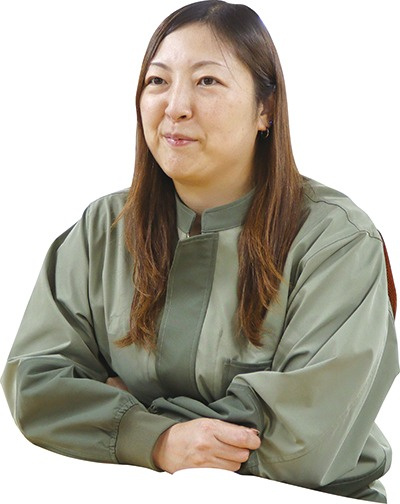
Shiho Mochizuki, Chief, Sales Development Department
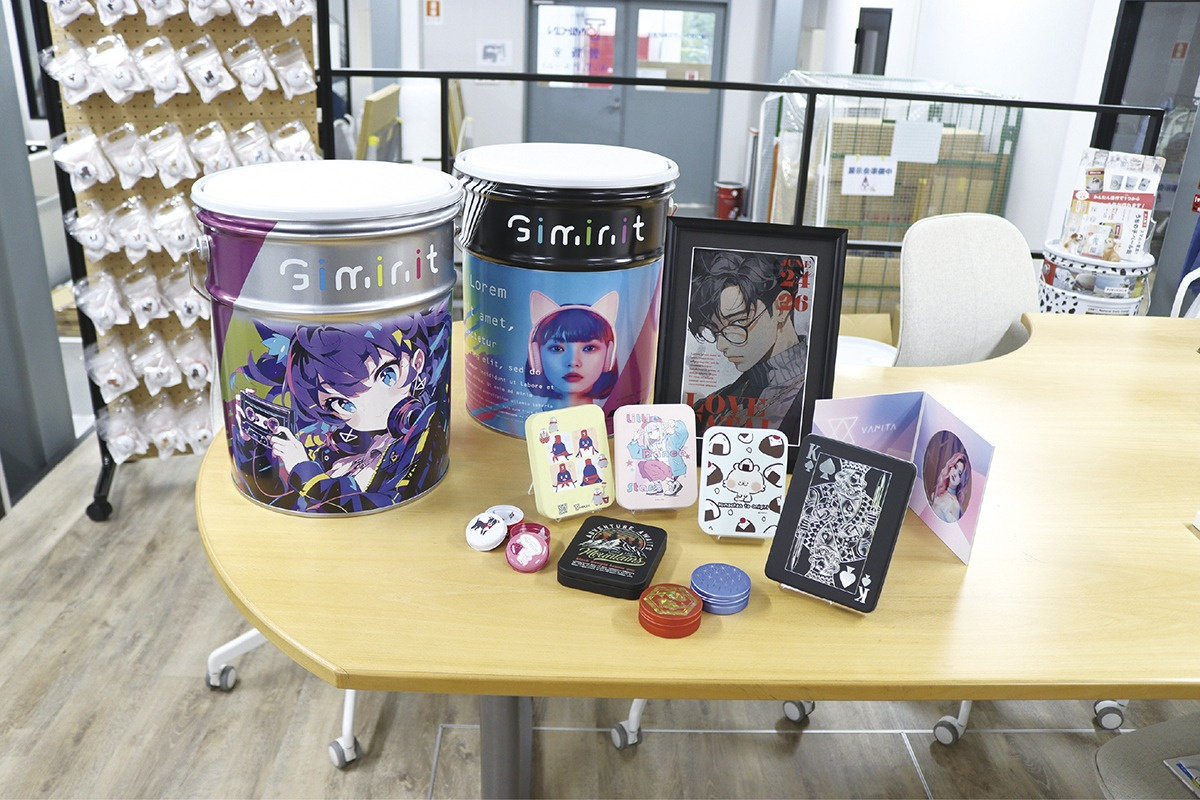
Popular custom cans and metal posters. Vivid character graphics stand out beautifully against the metallic surface.
The three units were introduced to improve productivity. The previous large-format UV printer was nearly twice the size of the JFX200-1213 EX, so only one unit could fit in the production area. In contrast, the compact JFX200-1213 EX supports A0-size printing, allowing three units to be installed in a single room.
The biggest advantage of having three units is the ability to handle multiple jobs at the same time. The company receives daily orders for custom cans in a wide range of sizes and designs, from palm-sized items to bucket-shaped containers. With only one printer, jobs often had to wait in line, but now the next print job can begin immediately.
"The compact size is a major advantage because we can fit three units in the same space. Productivity has improved significantly. We now produce about 1,000 cans a day, or 20,000 to 30,000 a month. There is virtually no waiting time between print jobs, which makes the workflow much smoother," says Mochizuki.
Tomiyasu uses different ink configurations for each printer. One unit is equipped with two white and two clear ink cartridges for designs featuring raised clear effects and white ink. The other two use light cyan and light magenta for pale colors and gradients.
Raised clear ink on matte cans creates eye-catching designs.
Another benefit is the expansion of the product lineup.
With clear ink, which was not available on the previous printer, the company can now create more elaborate designs. The matte-finish "Charmont" can shown below, featuring clear printing on the top surface, has become especially popular at exhibitions and retail stores.
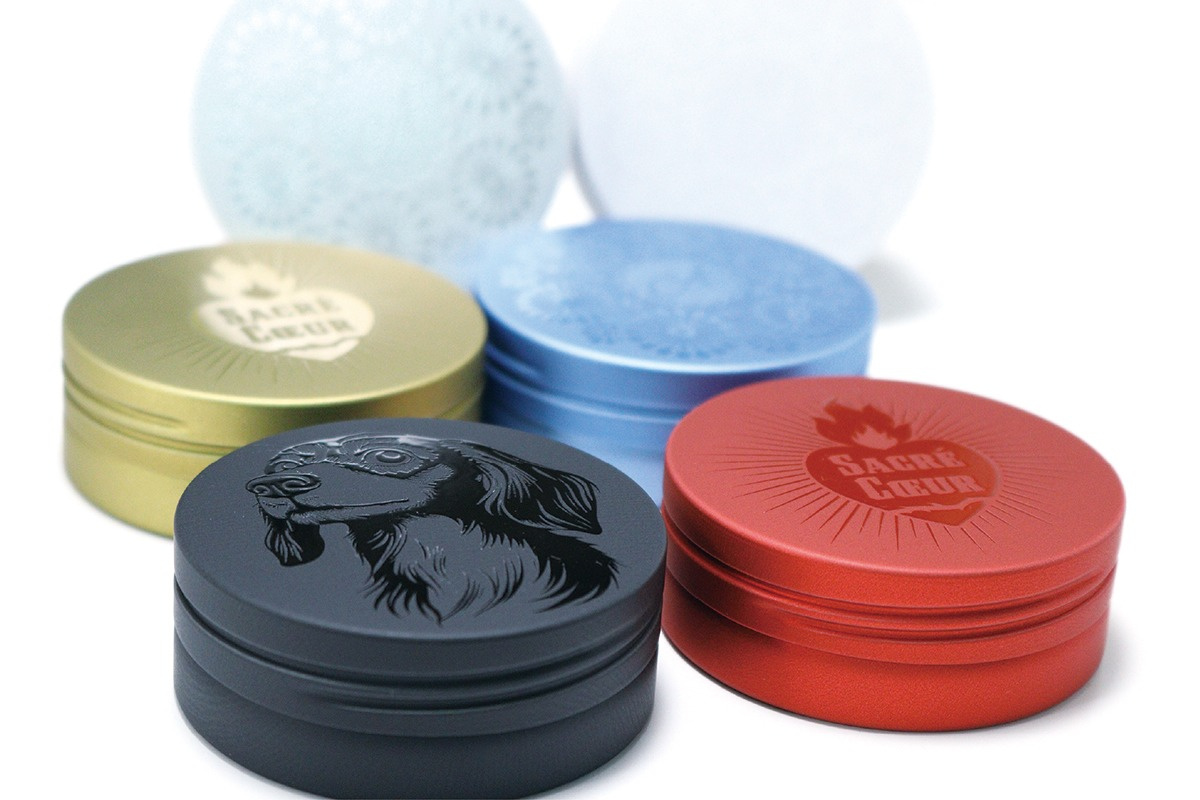
The popular "Charmant" can combines a matte finish with raised clear ink for an eye-catching design.
"Even though the ink is transparent, the raised surface gives it a strong presence. We increasingly recommend clear ink for customers who want to showcase logos subtly. It is especially popular for cosmetic and accessory packaging," says Mochizuki.
Clear ink also enables foil decoration. Used as an adhesive with a foil stamping machine, it has allowed the company to largely automate foiling and bring the process in-house.
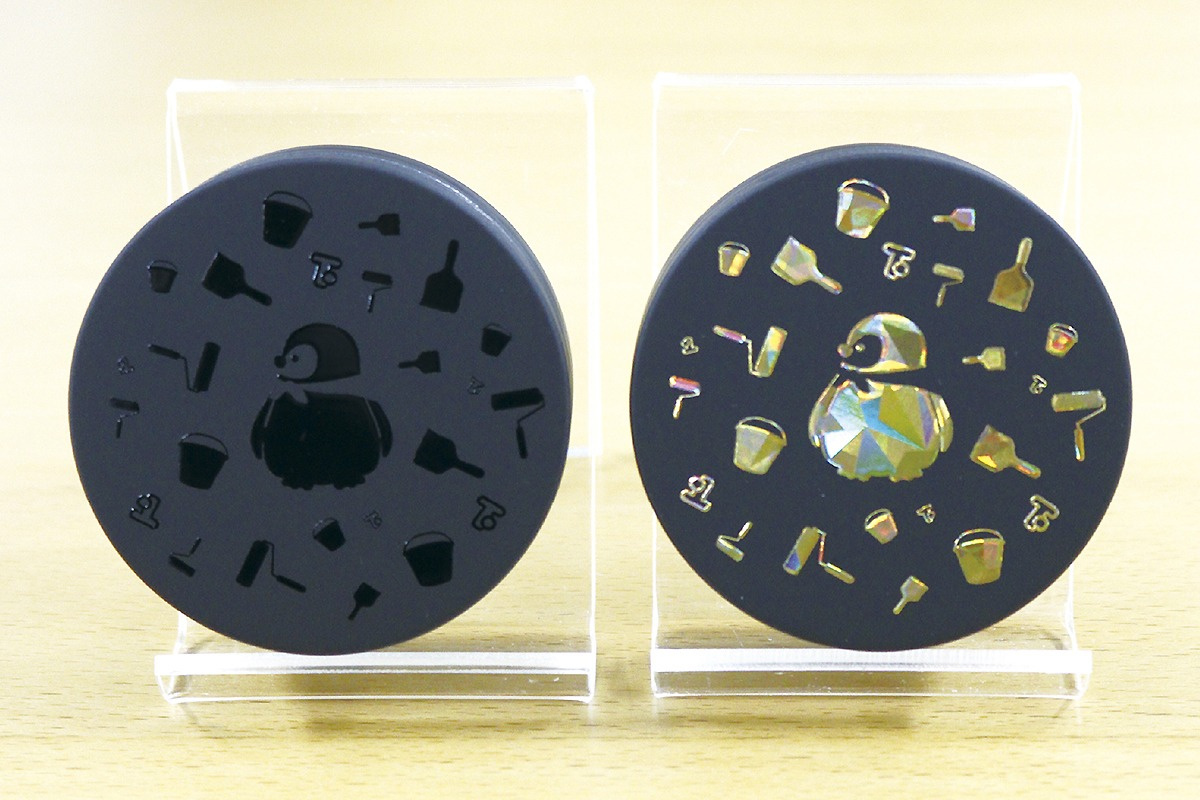
Left: clear ink only. Right: foil applied. The JFX clear ink acts as an adhesive, allowing the foil to transfer simply by pressing it onto the printed surface.
Using white ink on silver cans was another major breakthrough. Although the previous printer also had white ink, it tended to crack on silver cans. Mimaki’s white ink, however, proved durable enough to withstand the can-forming process.
"The ink has excellent flexibility and adheres firmly to the surface, so the design remains clean even after coating. Our customers have also responded very positively to the silver finish," says Mochizuki.
Operators also say maintenance has become much easier.
"Cleaning the printheads used to interrupt our work, but the JFX’s automatic cleaning function is very effective. Now we only need to wipe the area lightly with cleaning solution and a cotton swab when necessary, while most maintenance is handled by the machine."
Ease of use is another advantage. One newly hired graduate was able to handle the workflow independently after just three months.
"I had no previous printing experience, but the controls are simple, and the table is compact enough for me to reach the entire surface easily, so I got used to it quickly."
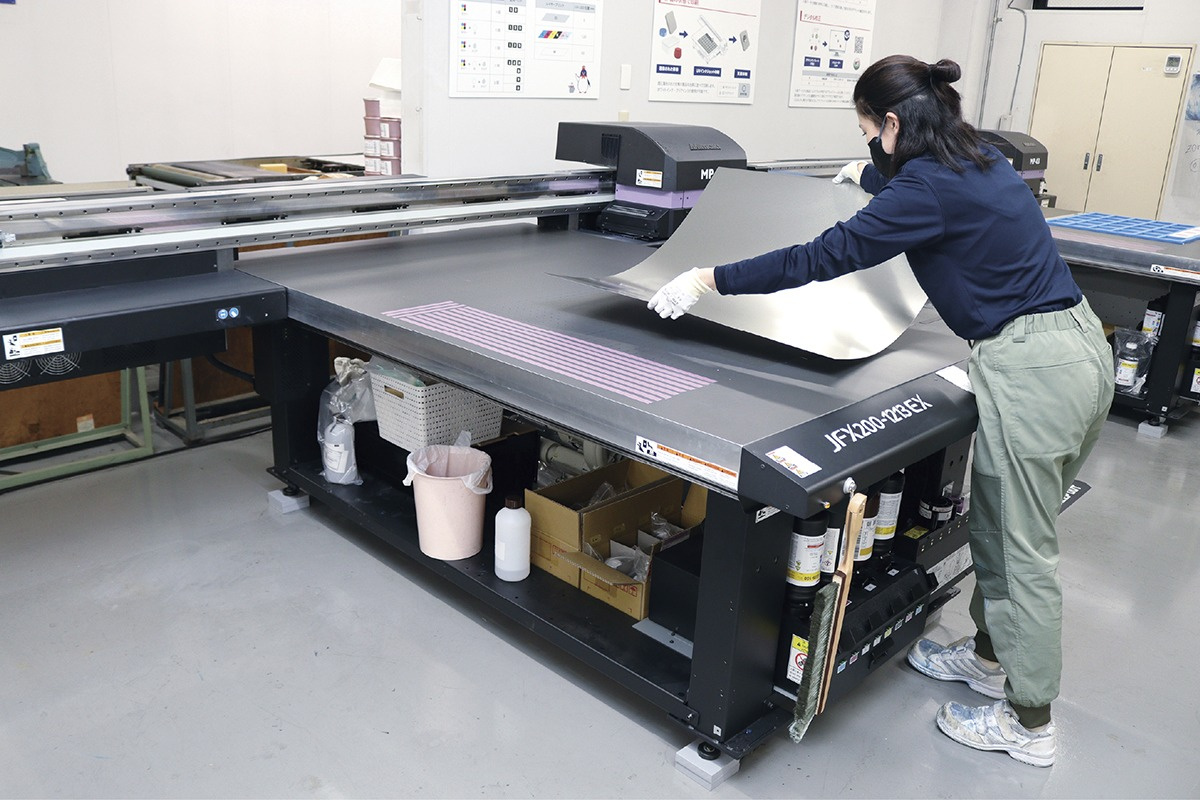
The compact table size allows female operators to easily reach all four corners. Even a new employee quickly became comfortable operating the printer.
Introducing the JFX has improved both productivity and the company’s product lineup. Foil decoration is especially popular for fan merchandise, and the company has seen sales increase by tens of millions of yen in just one year.
User profile
- NameTomiyasu Metal Printing Co.,Ltd.
- IndustryPrinting and plate-making for tinplate and other metal sheets, and all related business activities.
- Address577 Naezuka-cho, Soka-shi, Saitama, Japan
- Phone number+81-48-925-1581
- URLhttps://tomikin.co.jp/index.html
Related articles
- From Artisans to Operators. Digitizing Artwork Printing and Gold Foiling with the UJF-7151 plusII: Sakura Seisakujo Co., Ltd.
- Express Print boosts production using an expanded fleet of Mimaki technologies

- Producing 100,000 units a month with about 40 UV printers! What is the future vision of a leading manufacturer of goods?: SYNC INNOVATION Inc.